
For most players, the best putter is a straight or slightly understable model in grippy base plastic, such as the Axiom Proxy, Discmania P2 or Prodigy PA-3, with a speed of 2–3 and little fade. If you also throw your putter off the tee and on approaches, add a stiffer or more overstable throwing putter, such as the Axiom Envy or Discraft Zone.
Updated September 2026.
This guide covers putter types, plastic firmness, rim depth, weight and flight numbers, and compares 12 putters and approach discs. The models were chosen using Powergrip’s sales and stock data from March to September 2026, and they are grouped in the same way as on our stability pages: understable, straight and overstable putters.
Putting putter or throwing putter?

The putter is the slowest disc type, and you throw most of your short shots with it. Many players carry two putters for different jobs.
- A putting putter is the disc you putt with. Players usually choose a grippy, fairly soft plastic and a straight flight, so the disc feels the same in the hand every time and flies predictably over a short distance.
- A throwing putter is a putter you throw off the tee on short holes and on approach shots. It is often a stiffer or more durable plastic, because a hard throw flexes a soft disc and a throwing putter hits trees and the ground more often than a putting putter.
- An approach disc, or approach putter, is usually an overstable putter such as the Discraft Zone or Axiom Envy. Its fade makes it stop predictably, and it holds its line into a headwind.
A good way to start is to choose the same mould in two versions: a softer one for putting and a stiffer one for throwing. The Axiom Proxy, for example, comes in Electron Soft, Electron and Electron Firm, which share the same flight numbers but feel different.
Comparison: 12 putters by stability
The table lists best-selling putters and approach discs that were well stocked in September 2026. The flight numbers are the manufacturers’ ratings, and the feel describes the plastic version named in the table.
| Model | Manufacturer | Flight numbers | Flight | Feel | Best for |
|---|---|---|---|---|---|
| Proxy | Axiom Discs | 3 / 3 / -1 / 0.5 | Understable | Grippy Electron base plastic, also in Soft and Firm | Beginners and putting; our best-selling putter in 2026 |
| Pixel | Axiom Discs | 2 / 4 / 0 / 0.5 | Straight | Deep profile with a small micro bead, medium Electron | Putters who like a deep, full grip |
| P2 | Discmania | 2 / 3 / 0 / 1 | Straight | Medium, grippy D-Line Flex 2 | Putting and approaches with a reliable fade |
| P1 | Discmania | 2 / 3 / 0 / 0 | Straight | D-Line Flex 3, the stiffest of Discmania’s grippy putter plastics | Players who want a neutral flight with no fade |
| Pure | Latitude 64 | 3 / 3 / -1 / 1 | Straight | Soft Zero Soft, shallow and beadless | Players who like a shallow grip; cold weather |
| Watt | MVP Disc Sports | 2 / 5 / -0.5 / 0.5 | Straight | Soft Electron Soft, fairly deep profile | Players who want lots of glide for straight putts and drives |
| PA-3 | Prodigy Disc | 3 / 3 / 0 / 1 | Straight | Grippy 300 base plastic, beaded rim | Straight, predictable putts and approaches |
| Sensei | Discmania | 3 / 3 / 0 / 1 | Straight | Low profile, Active Base base plastic | Beginners and putting practice |
| Aviar Putt & Approach | Innova | 2 / 3 / 0 / 1 | Straight | DX base plastic that becomes more understable with wear | An affordable, versatile classic |
| Envy | Axiom Discs | 3 / 3 / 0 / 2 | Overstable | Electron base plastic | Approaches, tee shots and wind |
| Luna | Discraft | 3 / 3 / 0 / 3 | Overstable | Durable Big Z premium plastic | Putters who want a dependable fade |
| Zone | Discraft | 4 / 3 / 0 / 3 | Overstable | Durable Z Line premium plastic, low profile | Headwinds, forehands and approaches |
In our webshop, the models in the table cost about €9–15 in base plastics and about €19–28 in premium plastics and team or signature editions. Prices may vary by plastic, version and time of purchase.
Flight numbers on a putter
A putter’s flight numbers are read the same way as on any other disc: speed, glide, turn and fade.
- Speed on a putter is usually 2–4. Most players putt with speed 2–3 discs, while speed 4 models such as the Zone are typically approach discs.
- Glide tells you how easily the disc carries. A high-glide putter such as the Watt (glide 5) flies a long way with little power, while a low-glide putter stops sooner.
- Turn tells you how much the disc curves early in the flight. On a putter it is usually 0 or -1. On a right-handed backhand, an understable putter such as the Proxy (-1) drifts slightly right early in the flight.
- Fade tells you how much the disc hooks at the end of the flight. On a right-handed backhand, fade takes the disc left. A fade of 0–1 means a straight finish, while a fade of 2–3 makes a putter an overstable approach disc.
On a right-handed forehand and a left-handed backhand the directions are mirrored. A putt is so short that small differences in stability mainly show on long putts and in the wind.
Understable putters
An understable putter glides easily and, on a right-handed backhand, drifts gently right, which makes it an easy choice for beginners and slower arm speeds. On a forehand or for left-handers the direction is mirrored. The Axiom Proxy is our best-selling putter in 2026. Its flight numbers are 3 / 3 / -1 / 0.5, and the manufacturer describes it as a low-profile, straight-to-understable putter.
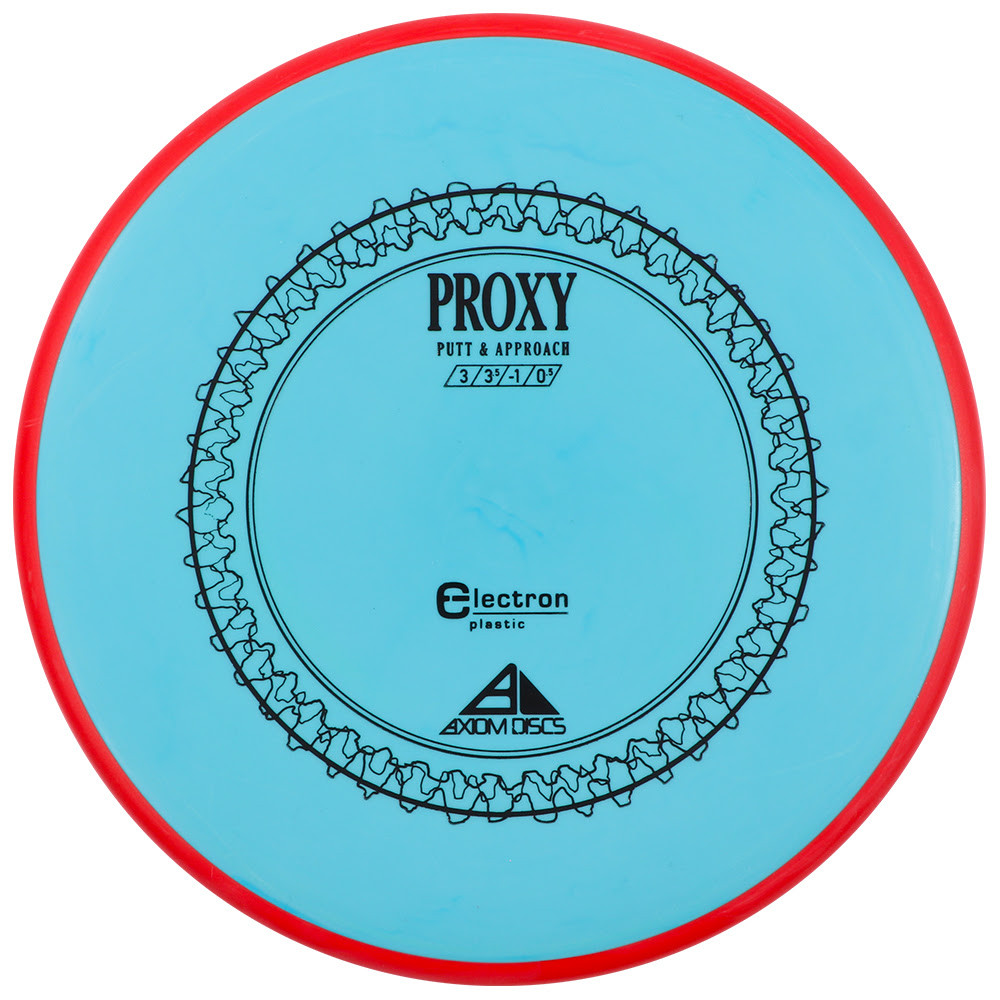
Axiom Discs Electron Proxy
A straight, gliding putter in grippy Electron plastic. The same disc also comes in softer Electron Soft and stiffer Electron Firm. Flight numbers 3 / 3 / -1 / 0.5.
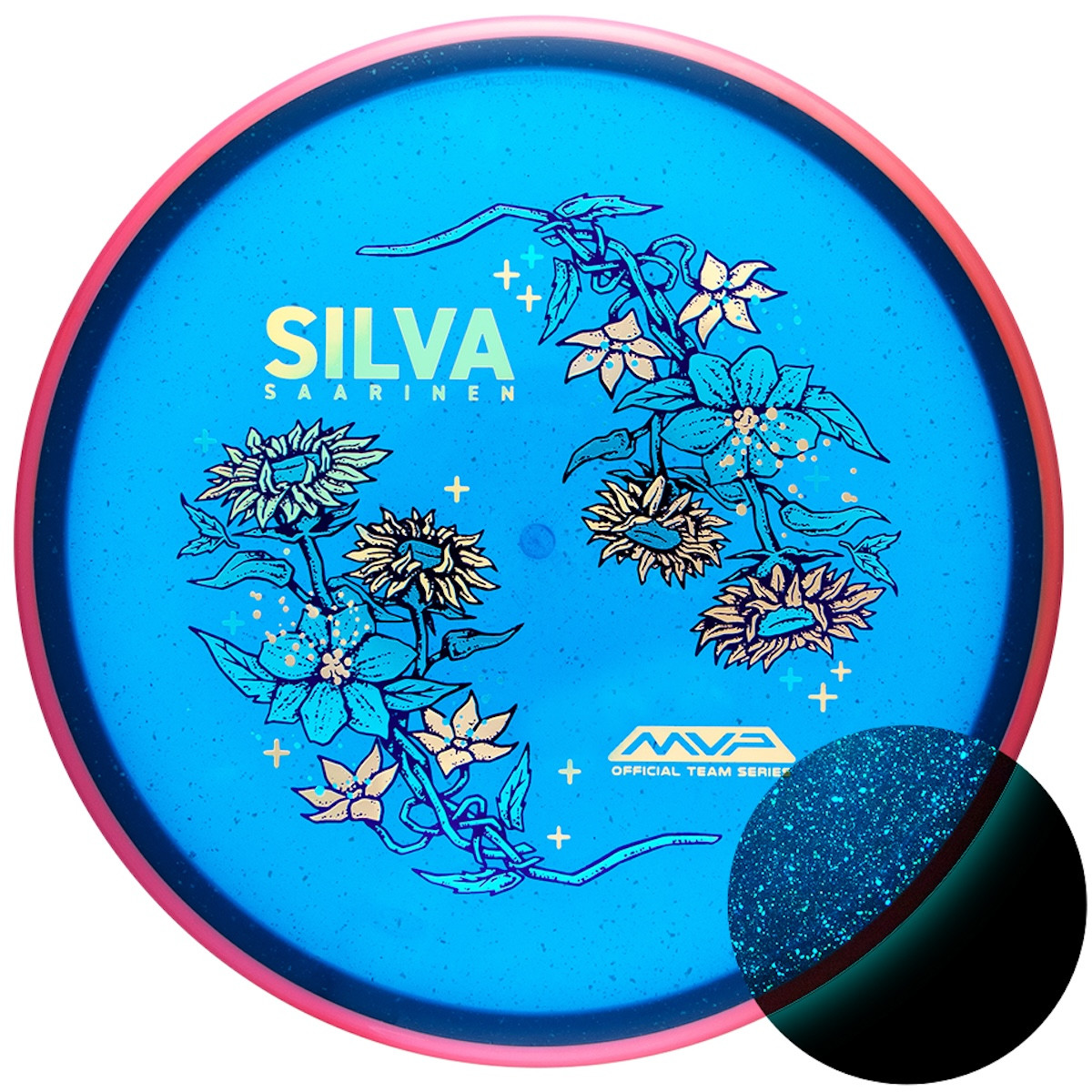
Axiom Discs Particle Glow Proton Soft Proxy Silva Saarinen Team Series – Forest Stars
Team Powergrip player Silva Saarinen’s signature Proxy in soft, glow-in-the-dark Glow Proton Soft plastic. According to the product page it is slightly more overstable than the Neutron Proxy, so it also works as a throwing putter.
Straight putters
A straight putter flies where you aim it and finishes with a small fade. Most discs used for putting belong to this group. The differences between models are mainly in feel: rim depth, rim shape and plastic firmness.

Axiom Discs Electron Pixel Simon Line
Simon Lizotte’s signature putter with a deep profile and a small micro bead on the underside. The Pixel is our second best-selling putter in 2026. Flight numbers 2 / 4 / 0 / 0.5.

Discmania D-Line Flex 2 P2
A straight putter that finishes with a reliable fade. Medium D-Line Flex 2 grips well in all conditions. Flight numbers 2 / 3 / 0 / 1.
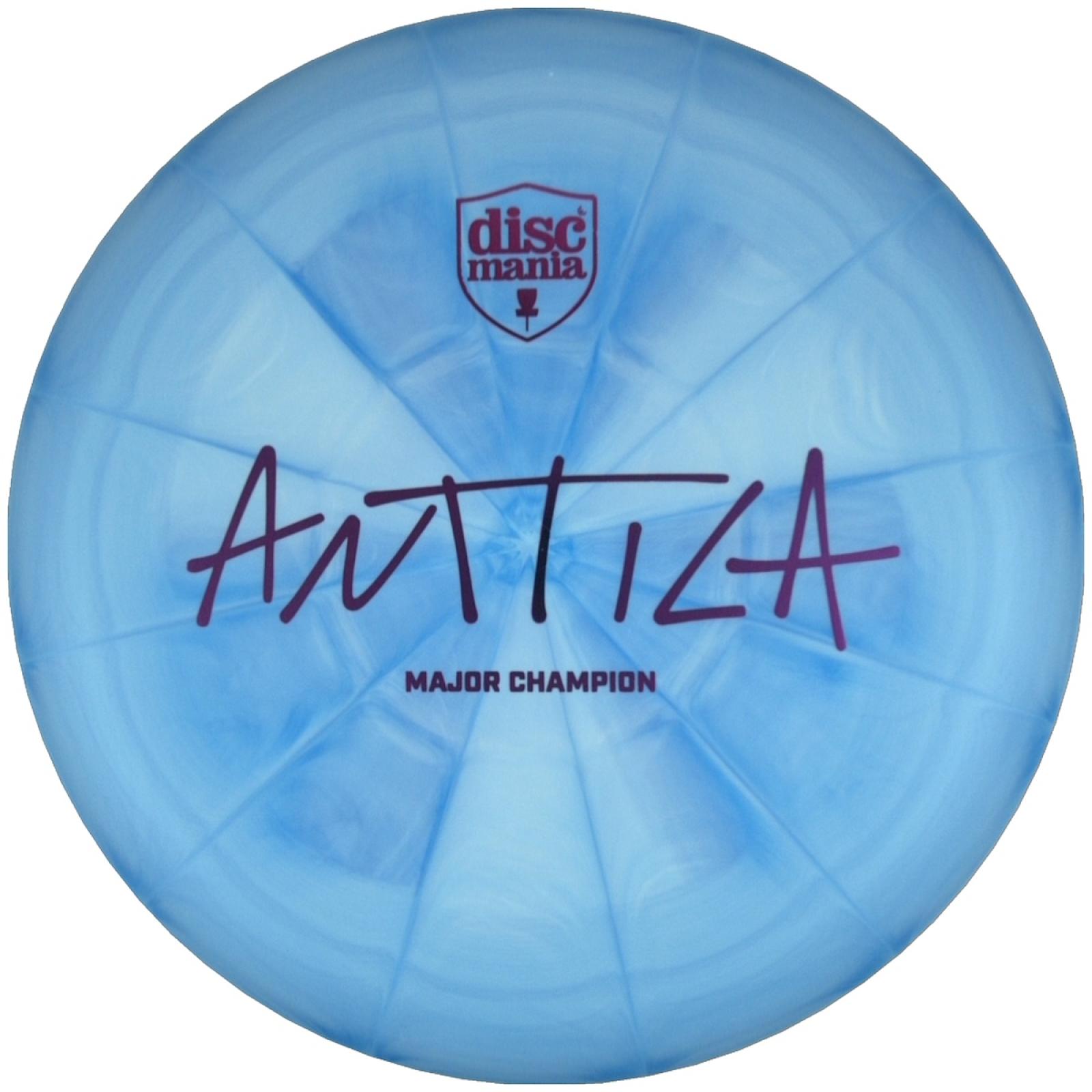
Discmania D-Line Flex 3 Vapor P1 Niklas Anttila Edition – Major Champion
Niklas Anttila’s signature P1 is a more neutral, gliding putter than the P2, with no fade. D-Line Flex 3 is the stiffest of Discmania’s grippy putter plastics. Flight numbers 2 / 3 / 0 / 0.

Latitude 64 Zero Soft Pure
A shallow, beadless putter with a straight flight and a small fade. Soft Zero Soft stays grippy in cold and damp weather. Flight numbers 3 / 3 / -1 / 1.
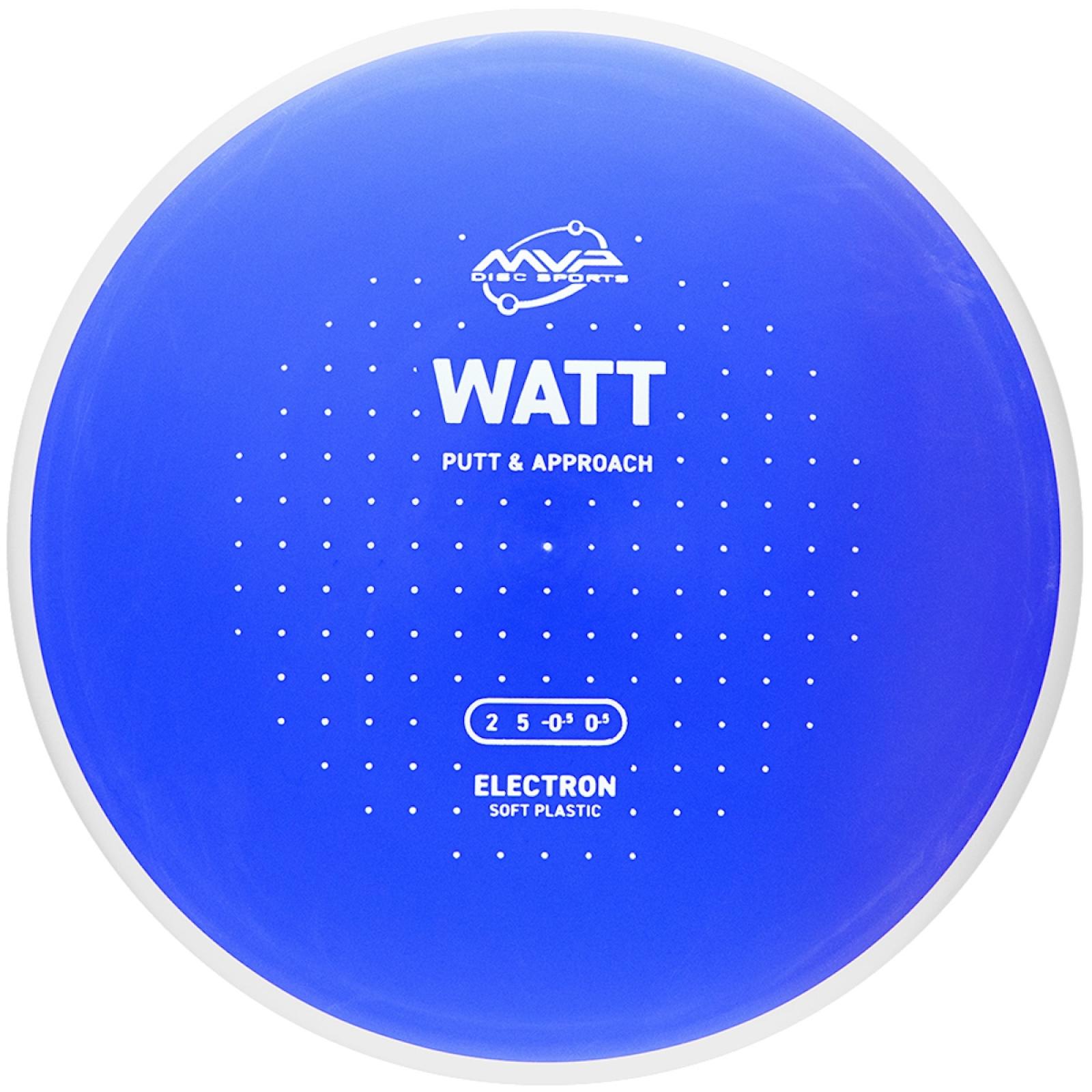
MVP Disc Sports Electron Soft Watt
A fairly deep putter with an exceptional amount of glide. Soft Electron Soft suits putting. Flight numbers 2 / 5 / -0.5 / 0.5.

Prodigy Disc 300 PA-3
Prodigy’s most popular straight putter, with a beaded rim. Grippy 300 plastic flies straighter as it wears in. Flight numbers 3 / 3 / 0 / 1.
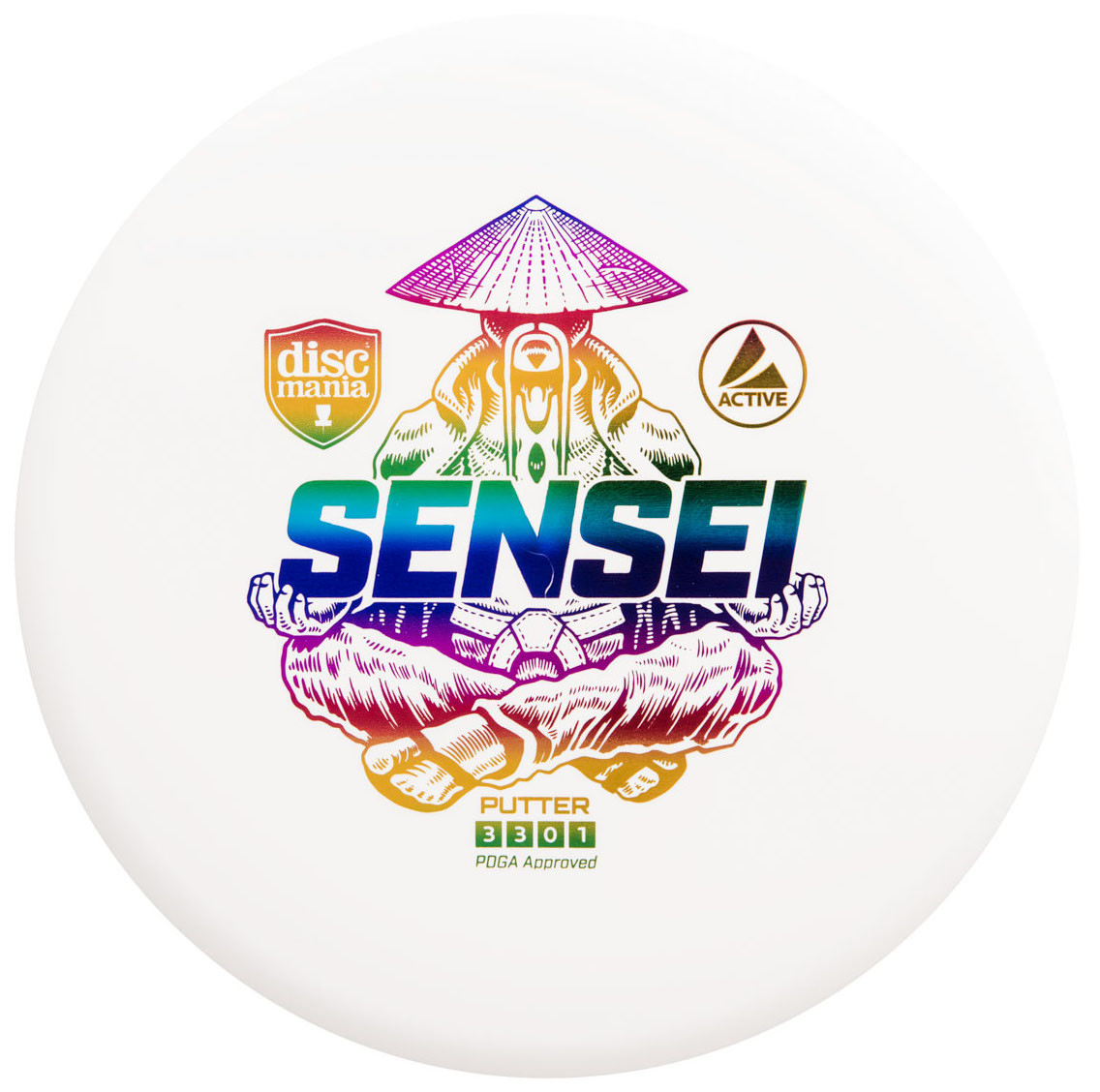
Discmania Active Base Sensei
A low-profile putter that fits any hand. It flies straight at both high and low speeds, so it is a good choice for beginners. Flight numbers 3 / 3 / 0 / 1.

Innova DX Aviar Putt & Approach
Innova’s classic putter in affordable DX plastic. It flies straight when new and gradually turns more as it wears. Flight numbers 2 / 3 / 0 / 1.
Overstable putters and approach discs
An overstable putter reliably fades at the end of its flight, to the left on a right-handed backhand. On a forehand or for left-handers the direction is mirrored. An overstable putter holds its line into a headwind and on hard throws, and it stops predictably, so it is widely used for approaches and tee shots on short holes.
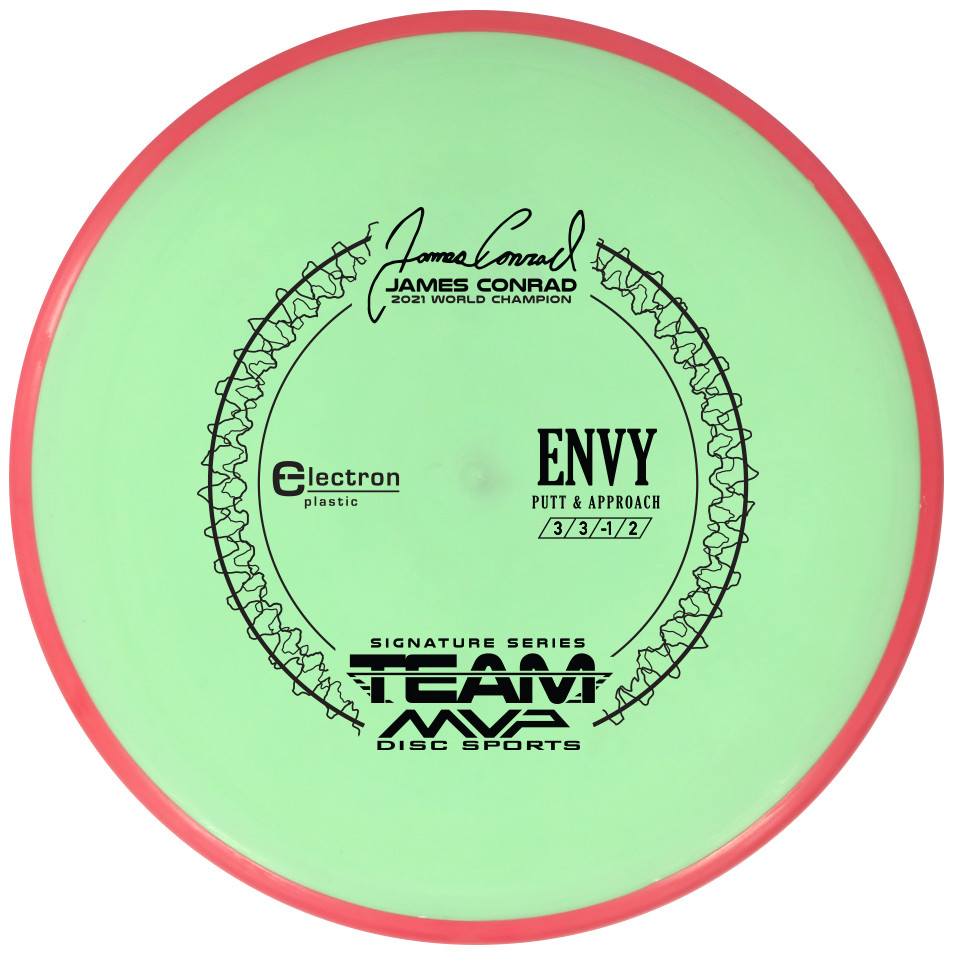
Axiom Discs Electron Envy James Conrad Signature Series
Axiom rates the Envy as a slightly overstable putter that works for tee shots and approaches as well as putts. The Envy is our third best-selling putter in 2026. Flight numbers 3 / 3 / 0 / 2.
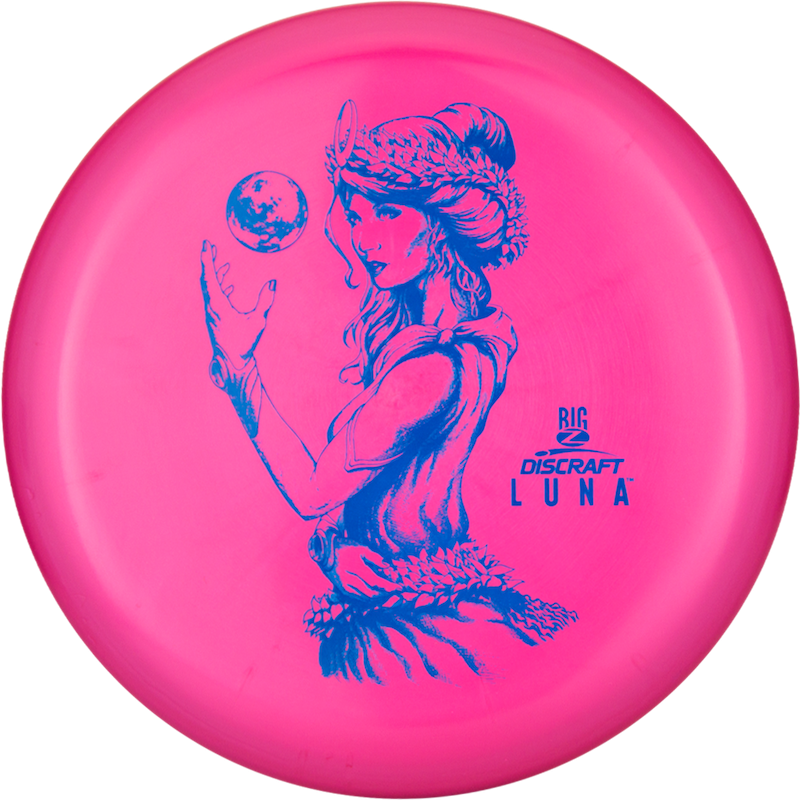
Discraft Big Z Luna Paul McBeth
A putter designed with Paul McBeth, in durable Big Z plastic. The Luna is the putter for players who want a dependable fade at the end of the flight. Flight numbers 3 / 3 / 0 / 3.

Discraft Z Line Zone Paul McBeth
An overstable approach disc for headwinds and forehands. Its low profile gives a secure grip. Flight numbers 4 / 3 / 0 / 3.
Plastic and firmness: soft, medium or firm putter?
On a putter, the feel of the plastic often matters more than small differences in flight numbers. Most manufacturers make the same putter in several firmness levels.
- A soft putter, such as Electron Soft, Zero Soft or 300 Soft, flexes in the hand and feels grippy. Soft plastic is popular for putting and stays grippy in cold and damp weather.
- A medium putter, such as Electron, D-Line Flex 2, Zero Medium or 300, is a versatile compromise for putting and throwing.
- A firm or stiff putter, such as Electron Firm, Zero Hard or Discraft’s Z Line, keeps its shape on hard throws and is a common choice for a throwing putter.
Base plastic is cheaper and often grippier than premium plastic, but it wears faster. A worn base plastic putter often becomes straighter or more understable, which many players see as a good thing. Premium plastic such as Z Line, Big Z or Neutron withstands knocks for longer and keeps its flight, so it suits a throwing putter in particular.
Plastic stiffens in the cold. If you play all year round, a soft or medium base plastic stays grippier in freezing weather than a firm premium plastic.
Depth, grip and bead
A putter’s profile affects how the grip feels. A deep putter fills the hand and gives a solid grip, while a shallow putter feels lighter and suits smaller hands more easily.
- Deep profile: for example the Axiom Pixel and MVP Watt. According to Discmania’s specifications, the P2 is 2.1 cm tall with a rim depth of 1.6 cm.
- Shallow profile: for example the Discmania Sensei, Axiom Proxy, Discraft Zone and Latitude 64 Pure. According to Latitude 64, the Pure is 1.8 cm tall with a rim depth of 1.4 cm.
- A bead is a small ridge on the underside of the rim. Some players like the clear feel it gives the fingers, others prefer a smooth rim. The Prodigy PA-3 has a beaded rim, the Axiom Pixel has a small micro bead and the Latitude 64 Pure is beadless.
Depth and bead are a matter of taste, and neither is better than the other. The best way to choose is to hold the putter in your hand: our five Powergrip shops are in Finland, in Oulu, Turku, Tampere, Helsinki and Kuopio. We also ship orders from our webshop abroad.

Putter weight
A heavier putter, around 170–175 grams, holds its line better in the wind, and many players find it feels more stable when putting. A lighter putter gets moving with less power, so it suits juniors and slower arm speeds. Discmania, for example, lists a maximum weight of 176 grams for the P1 and P2. Choose the weight on the product page, and if you are unsure, pick a putting putter from the heavier end and a throwing putter of the same or slightly lower weight.
Several identical putters for practice
It pays to practise putting with identical discs, so every putt feels the same and you can correct your technique rather than the disc. When your practice discs are the same mould as your game putter, the feel carries straight over to your round. The Sensei putter is available in 10 disc sets in two plastics.
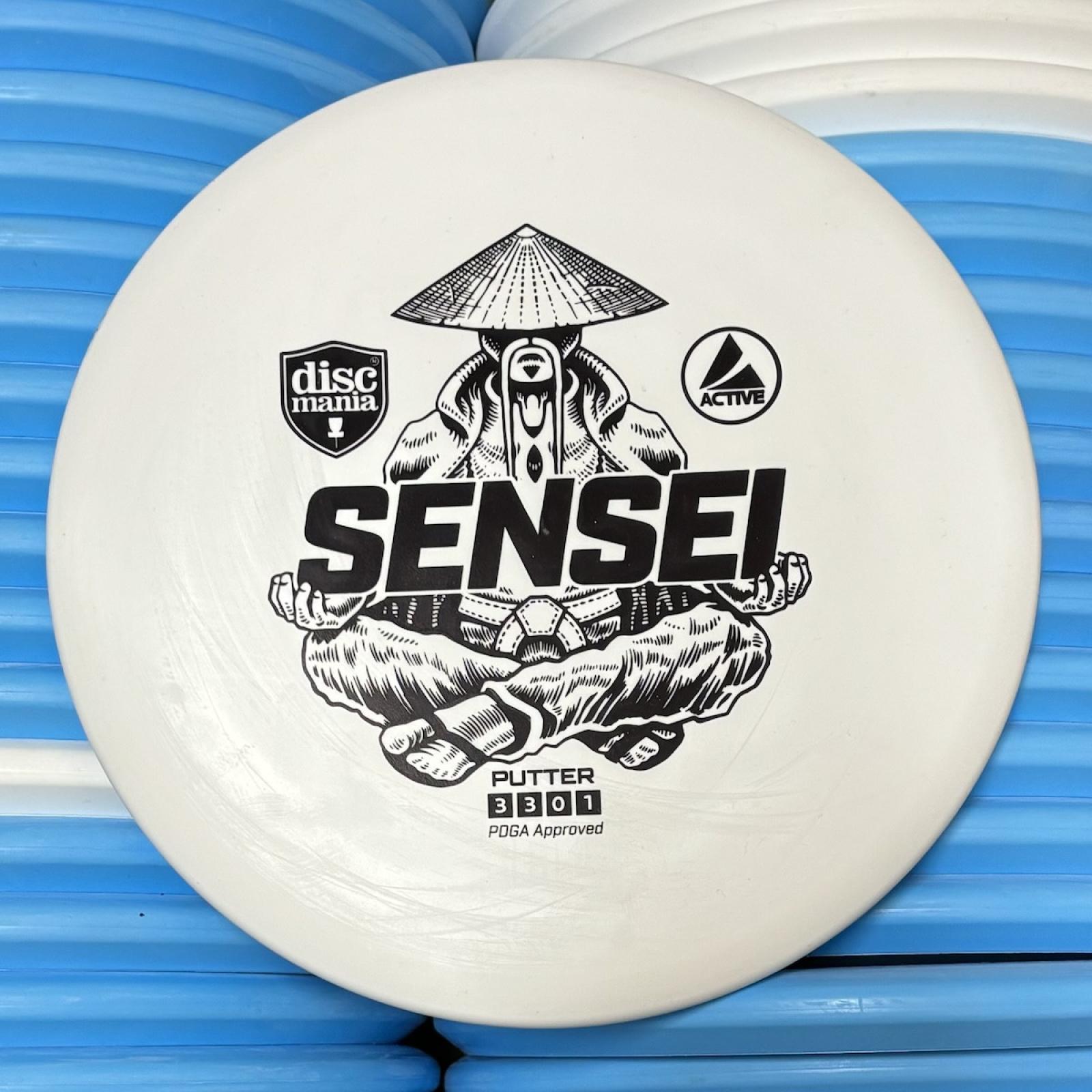
Discmania Active Base Sensei 10 Disc Set
Ten Active Base Sensei putters for putting practice. Price range about €130–140; prices may vary.
Discmania Active Base Sensei 10 Disc Set
Ten more affordable Active Base Sensei putters, for example for a home basket or club training. Price range about €70–80; prices may vary.
Frequently asked questions
What is the best putter for beginners?
A beginner is best served by a straight or slightly understable putter in grippy base plastic, such as the Discmania Active Base Sensei, Axiom Electron Proxy or Latitude 64 Zero Soft Pure. The Proxy is Powergrip’s best-selling putter in 2026. All three have a low profile, so they suit most hands.
What is a throwing putter and do I need one?
A throwing putter is a putter you use for tee shots and approaches. It is usually a stiffer or more durable plastic than a putting putter, and often slightly more overstable, such as the Axiom Envy or Discraft Zone. One putter is enough to start with, but if you putt and throw with the same disc, your putting putter wears and changes its feel faster.
Should I choose a soft or a firm putter?
Most players putt with a soft or medium putter, because it is grippy and feels consistent in the hand. For throwing, a medium or firm putter that does not flex on a hard throw works well. In winter, soft plastic stays grippier than firm plastic.
What is an understable putter?
An understable putter has a negative turn rating, for example -1 on the Axiom Proxy. On a right-handed backhand it drifts slightly right early in the flight and glides easily, so it suits slower arm speeds and long, straight putts. On a right-handed forehand and a left-handed backhand the direction is mirrored.
How many putters should I carry?
A good basic set-up is two putters: one for putting and one for throwing and approaches, ideally the same mould in different plastics. Many players also add an overstable approach disc such as the Zone or Envy. For putting practice, it is worth getting several identical putters, such as a Sensei 10 disc set.